
Stories of People & Place


Rohingya: The Meaning of Belonging explores the Rohingya beyond crisis narratives, tracing how history, language, faith, and cultural practice shape identity in the face of displacement. Grounded in historical research and lived experience, the article examines belonging not as a legal category alone, but as something carried through memory, movement, and everyday life across borders.

The Garo Record. Part One:
The Garo Man Who Came Home
North of Dhaka, a different order still holds. Among the Garo, or A·chik Mande, land passes through women, memory moves through the household, and culture is lived rather than displayed. This opening chapter begins not in the forest, but in the city, with a security guard whose return home reveals a system far older and more complex than the labels used to describe it. This is the entry point into a world under quiet pressure, where songs fade, language thins, and continuity is no longer guaranteed. ETHNOMAD steps inside, not to observe from a distance, but to document and support what remains while it is still being lived.
What Holds A Place Together
On land, memory, and the forms of life that sustain a place

The Wave That Changed Bali traces the moment Bali’s coastlines began to change, when surfers came looking for perfect waves and found an island already shaped by ritual, village life, and the sea. From that first encounter grew a new coastal world of board riders, beach economies, foreign dreams, and local adaptation. This is a story about surfing, but also about what happens when one wave carries an entire island into the modern imagination.


.jpg)
Living with India's wildlife in the
Sariskar Tiger Reserve.
In the complex web of life on Earth, humans and wildlife share a relationship marked by both symbiosis and conflict. This dynamic, evolving over millennia, echoes the broader narrative of our role within the natural world. With the advent of agriculture, this relationship underwent a profound transformation. Once an integral part of the ecosystem, humanity began exerting dominion over it, reshaping the environment and our place within it.
The story of Ireland and Palestine is not one of identical suffering but of shared memory, two peoples separated by geography yet bound by the experience of occupation. Both have lived under foreign rule, both were partitioned by imperial decree, and both have seen their histories rewritten by others to justify their subjugation.
Written by Farhana Akter, Living With the Hills explores everyday life in Bangladesh’s hill regions, where communities navigate steep terrain, fragile ecosystems, and the quiet pressures of climate change and development. Through close observation and local voices, the article reflects on adaptation, resilience, and what it means to live in a relationship with the land that shapes both livelihood and identity.

The Emery Way traces the deep connection between wine, land, and inheritance in Saint Émilion through the story of Château Coutet, one of the region’s last family-run estates on the limestone plateau. Centred on la façon émeri, an eighteenth-century glass sealing method, the article examines how heritage survives amid UNESCO recognition, rising land values, and growing pressure from global capital.

What The Fire Carries: Living Heritage and the Architecture of Survival
From firelight in Worimi country to Rohingya camps in exile, this essay explores the power of intangible cultural heritage. Story, song, dance, and art are not performance but transmission, carrying law, memory, and sovereignty across generations. When culture is silenced, societies fracture. When it is practiced, resilience takes root.
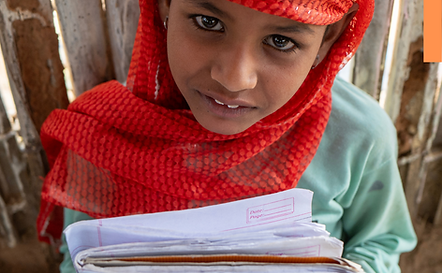
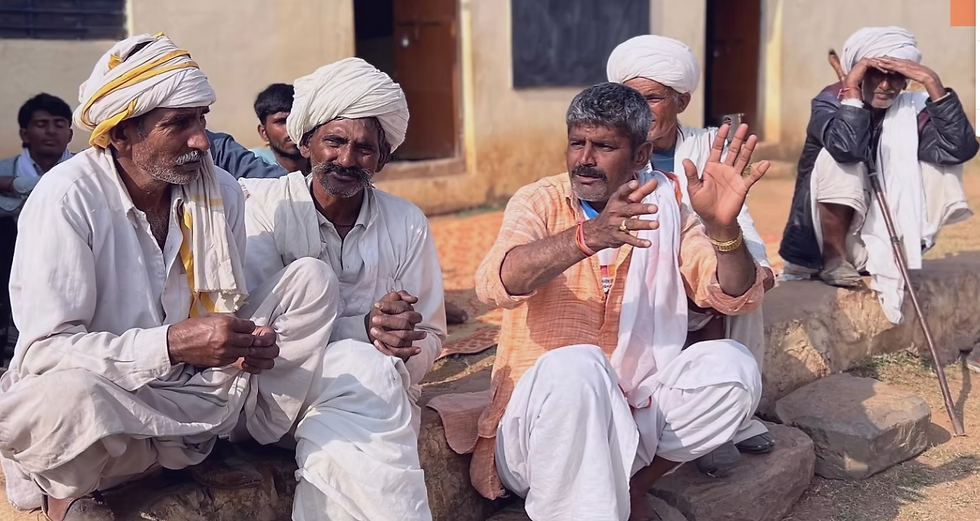
As I had done many times over the past few years, I was once again making my way to the outpost village of Kraska, hidden deep within Rajasthan's Sariska Tiger Reserve. Home to the Gurjar people, a Hindu tribal community, Kraska is a place where life still moves with the rhythms of pastoral tradition. For generations, the Gurjars have raised buffalo and goats, their livelihoods intertwined with the land in a semi-nomadic existence.


-
Emily Anna Mavridou
Growing up I was always hearing that you could find great quality produce at great prices at the vegetable market and for some reason the direct contact with the producers and its relaxed environment always excited and intrigued me. So, I thought why not go and visit the nearest vegetable market and also be immense in the experience? So one Saturday morning I visited the 'OXI vegetable market in the center of Nicosia close to the Eleftheria Square. OXI means no in the Greek language (one of the official languages in Cyprus), and its pronounced 'ohi.
-
Hannah Morissey
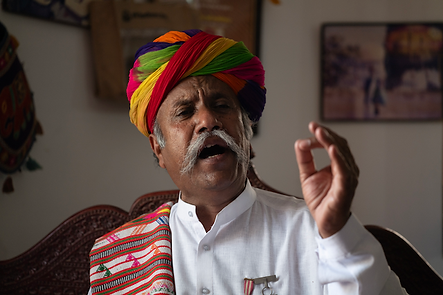
The sands of the Thar Desert (marked in red) stretch across northwestern India and into southeastern Pakistan. In this arid expanse, the searing winds of the 'Great Indian Desert' carry the centuries-old melodies of the Langa and Manganiyar people. For centuries, these Muslim hereditary folk musicians have shaped Rajasthani folk music with their soulful cadences, enlivening the halls of their patrons across the desert villages of Barmer, Jaisalmer, and Jodhpur.

-
Emily Anna Mavridou
Can a community preserve its identity after assimilation into a dominant culture for 50 years? And does the longing to return to a place and the nostalgia for how life once was ever fade away? These are questions that affect all communities on the island of Cyprus, especially after the 1974 conflict. The Maronite community of Cyprus, "a religious minority," has been among
those fighting to preserve its identity.


Acomedido is a Spanish upbringing principle still visible in parts of Latin America and Spain. It is about being helpful without being asked, taking responsibility, and contributing to the community without expecting a reward. In many Latin American villages, children help with cooking or cleaning during local festivals, not because anyone orders them to, but because it feels natural to be part of the whole.
-
Suss Van Lee
In the vast, golden expanse of the Algerian Sahara, the Saharawi refugees have endured for five decades, carving out a life amidst one of the harshest landscapes on Earth. Here, in the shadow of endless dunes and under an unyielding sun, resilience becomes a way of life.

In 40 years of travel, I regularly get asked: what is your favourite country? While the thoughts of so many people and places always bring a smile, contributing to the soul, it is difficult to go beyond the enchanting and complex island, nature, and people of Madagascar. If you haven't been yet, then definitely put it on the list of places to visit in this lifetime.
.png)


