

Our Commitment to Garo Culture

At The Garo Experience, we believe a guesthouse should do more than offer comfort in a beautiful setting. It should help sustain the cultural life of the place in which it stands. Our commitment is to support Garo culture not as a display for visitors, but as a living inheritance expressed through homestead life, hospitality, food, farming, weaving, music, story, and memory.
From the outset, this guesthouse has been shaped by a simple idea: that tourism in Nalikhali should bring lasting value to the community and help keep cultural knowledge close to home. Working alongside the host family and local community, we aim to create a place where visitors are welcomed with care, while the traditions, skills, and identity of the village are respected, strengthened, and carried forward.
For us, cultural commitment rests on three foundations: place, people, and understanding. The guesthouse is rooted in a living Garo homestead; it seeks to generate practical benefits for local families and cultural practitioners; and it invites guests to engage more deeply with the history, traditions, and everyday life of the Garo people.
Read on to see how ETHNOMAD and "The Garo Experience" put this commitment into practice.

Community Commitment
At The Garo Experience, community commitment is not an added feature. It is the foundation of the guesthouse itself. This is a family and village-based initiative rooted in Nalikhali, shaped in partnership with the host household and grounded in the everyday life of the Garo community. From the beginning, the aim has been clear: to create a form of tourism that brings direct value to local people while helping cultural knowledge, hospitality, and village life remain active and visible in the place where they belong.
Our commitment is practical as well as cultural. Income generated through the guesthouse is intended to support the host family, create local opportunities, and involve community members in ways that are meaningful and respectful. This may include local cooking, weaving visits, music and dance, storytelling, guiding, farming experiences, and other aspects of village life that can be shared on the community’s own terms. Rather than separating tourism from daily life, we want the guesthouse to remain connected to the people, skills, and relationships that give Nalikhali its character.
We also believe that a guesthouse such as this should leave something behind beyond a visitor’s stay. The records and outputs connected to this initiative will be housed and made available through The Garo Experience, Nalikhali Guesthouse, creating a local cultural resource through which language, song, memory, and community knowledge can continue to be accessed and carried forward.
In this way, our commitment is not only to welcome guests, but to help ensure that the benefits of tourism remain close to home, and that Garo culture continues to be valued as a living part of community life, not something removed from it.

Caring for the Environment
At The Garo Experience, environmental care begins with the way the guesthouse is built and lived in. These are earth buildings, made from earthen materials that sit naturally within the landscape and reflect a simpler, more grounded approach to construction. In a place like Nalikhali, where life remains closely tied to land, water, and season, building with earth is not only practical. It is also a way of respecting place.
Our aim is to keep the environmental footprint of the guesthouse as light as possible. Solar energy forms part of this approach, helping to meet basic needs while reducing reliance on more resource-intensive systems of power. We also keep energy use modest in daily operation, favouring simplicity, restraint, and the avoidance of excess.
Waste is kept to a minimum wherever possible. In rural environments, rubbish does not disappear once it is thrown away. It remains in the landscape and quickly becomes part of village life. For that reason, we seek to reduce waste at source, make careful use of materials, and avoid the disposable habits that too often accompany tourism.
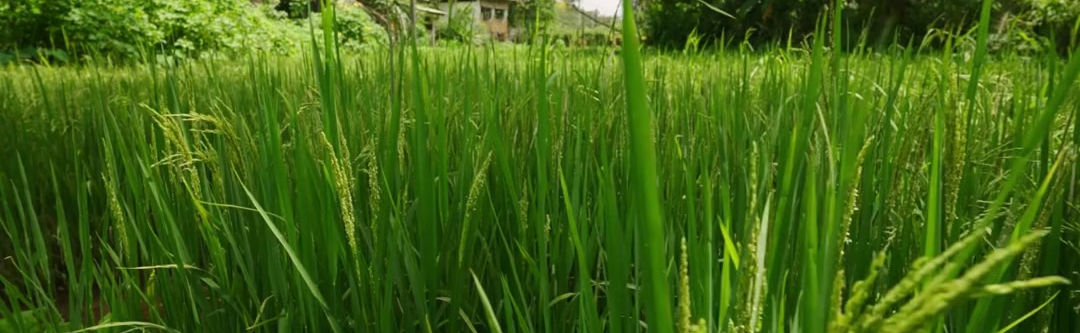
Our meals are prepared, as far as possible, from organic, locally grown produce harvested by the community. This keeps food rooted in the local landscape, supports village livelihoods, reduces transport and packaging, and gives guests a more direct connection to the land and the people who work it.
Environmental responsibility here is not treated as a slogan. It is part of how the guesthouse is built, how it is run, and how guests are welcomed. The fields, trees, village paths, and homestead setting are central to the character of Nalikhali. To care for them is part of hosting properly.
